

Seed Library
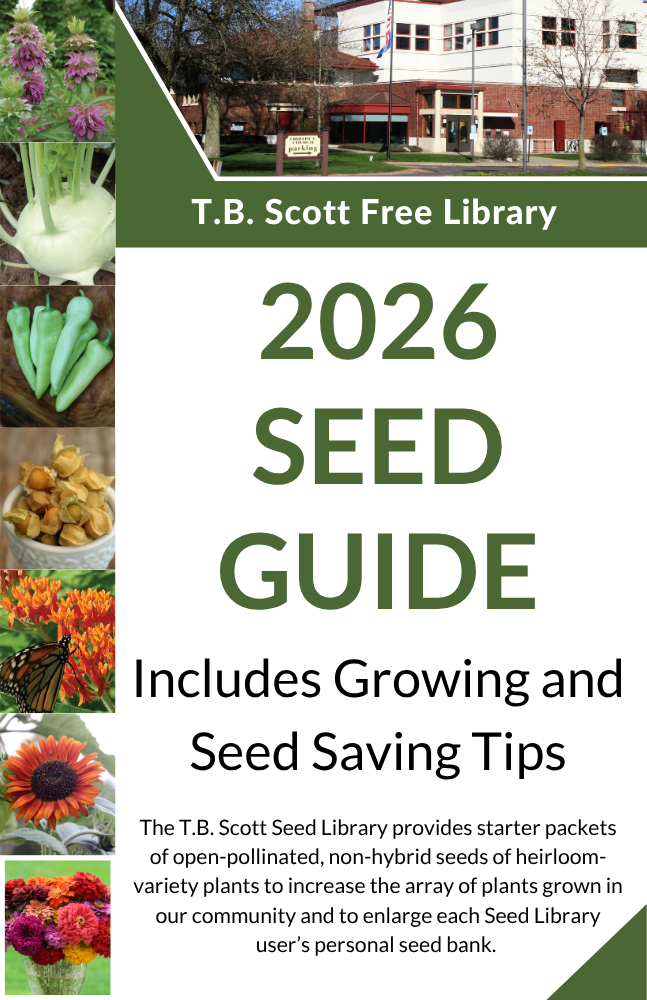
Welcome Back Spring by Checking Out the eight Seed Varieties at the 2026 Seed Library!
The T.B. Scott Free Library will once again be checking out heirloom seeds for FREE to library card holders. Seed varieties for this year include:
- Lemon Mint – Herb
- Delicatesse White – Kohlrabi
- Hungarian Yellow Wax – Sweet Pepper
- Aunt Molly’s – Ground Cherry
- Prairie – Butterflyweed
- Detroit Dark Red – Beet
- Autumn Beauty – Sunflower
- SSE Zinnia Mix
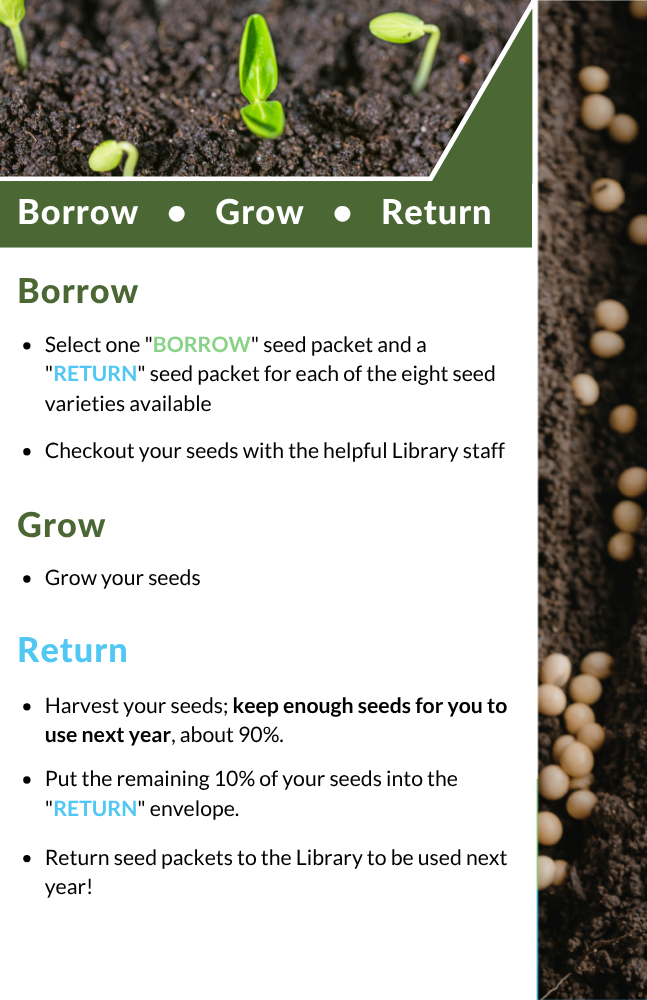
The principle behind the seed library is simple: library patrons check out their choice of seeds, enjoy the growing season all summer long, then “return” a portion of the seeds that they collect from their fall harvest so that those seeds can be used for next year’s crop of seed borrowers. Borrowers are free – and encouraged – to keep the bulk of the seeds they collect so as to have them for the next year’s planting. All of the seeds chosen come from the Seed Savers’ Exchange, an Iowa-based non-profit whose goal is to preserve and promote plant diversity in home gardens.
If you prefer curbside pickup, request your seeds by calling 715-536-7191.



Explore the eight different varieties of seeds available this year
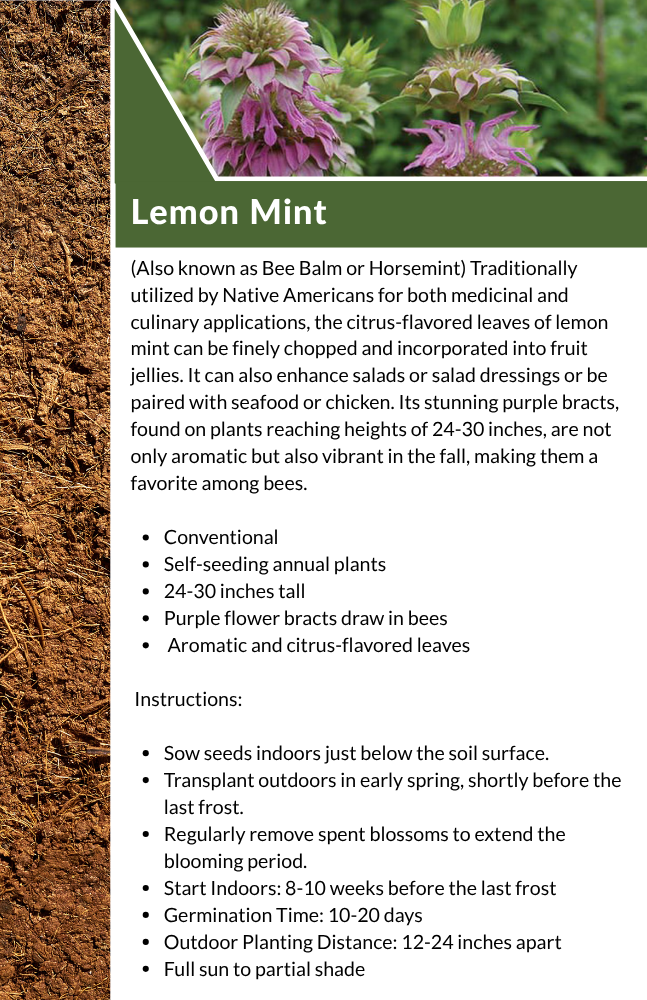
Lemon Mint
(Also known as Bee Balm or Horsemint) Traditionally utilized by Native Americans for both medicinal and culinary applications, the citrus-flavored leaves of lemon mint can be finely chopped and incorporated into fruit jellies. It can also enhance salads or salad dressings or be
paired with seafood or chicken. Its stunning purple bracts, found on plants reaching heights of 24-30 inches, are not only aromatic but also vibrant in the fall, making them a favorite among bees.
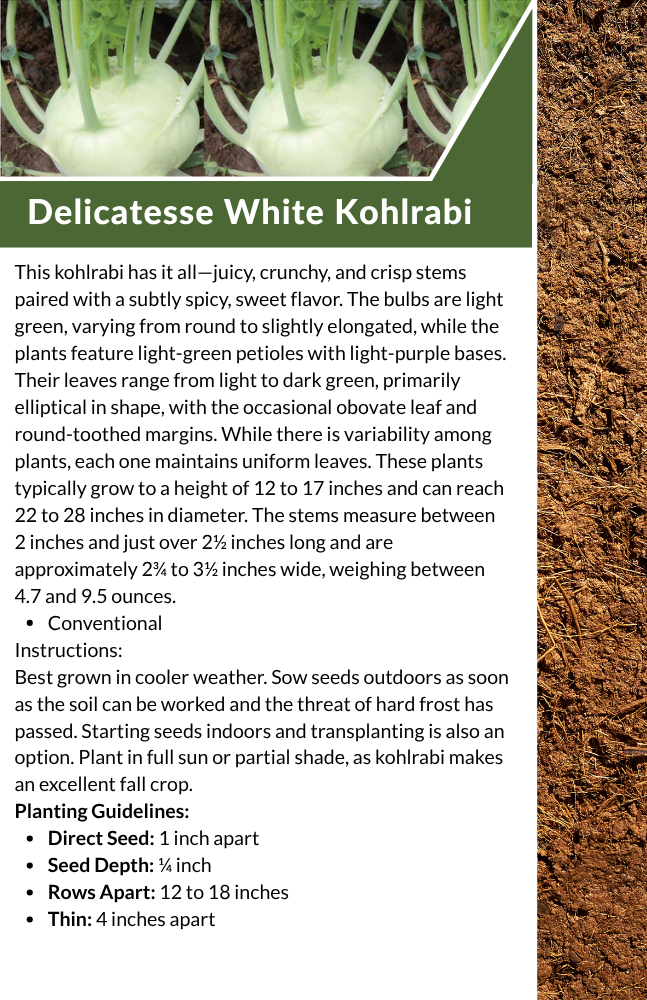
Delicatesse White Kohlrabi
This kohlrabi has it all—juicy, crunchy, and crisp stems paired with a subtly spicy, sweet flavor. The bulbs are light green, varying from round to slightly elongated, while the plants feature light-green petioles with light-purple bases. Their leaves range from light to dark green, primarily elliptical in shape, with the occasional obovate leaf and round-toothed margins. While there is variability among plants, each one maintains uniform leaves. These plants
typically grow to a height of 12 to 17 inches and can reach 22 to 28 inches in diameter. The stems measure between 2 inches and just over 2½ inches long and are approximately 2¾ to 3½ inches wide, weighing between 4.7 and 9.5 ounces.
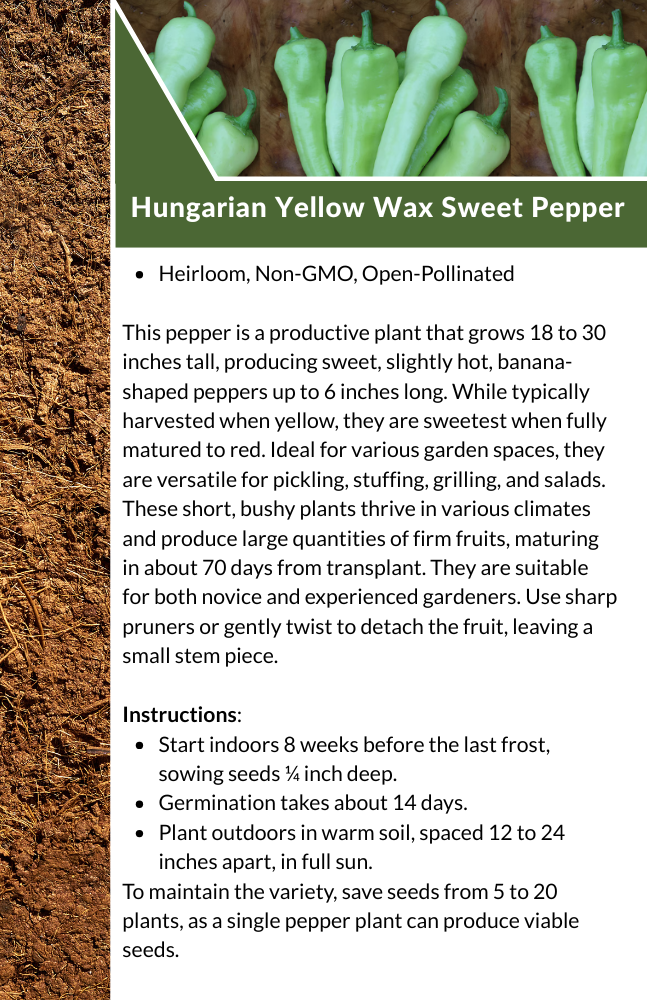
Hungarian Yellow Wax Sweet Pepper
This pepper is a productive plant that grows 18 to 30 inches tall, producing sweet, slightly hot, banana-shaped peppers up to 6 inches long. While typically harvested when yellow, they are sweetest when fully matured to red. Ideal for various garden spaces, they are versatile for pickling, stuffing, grilling, and salads. These short, bushy plants thrive in various climates
and produce large quantities of firm fruits, maturing in about 70 days from transplant. They are suitable for both novice and experienced gardeners. Use sharp pruners or gently twist to detach the fruit, leaving a small stem piece.
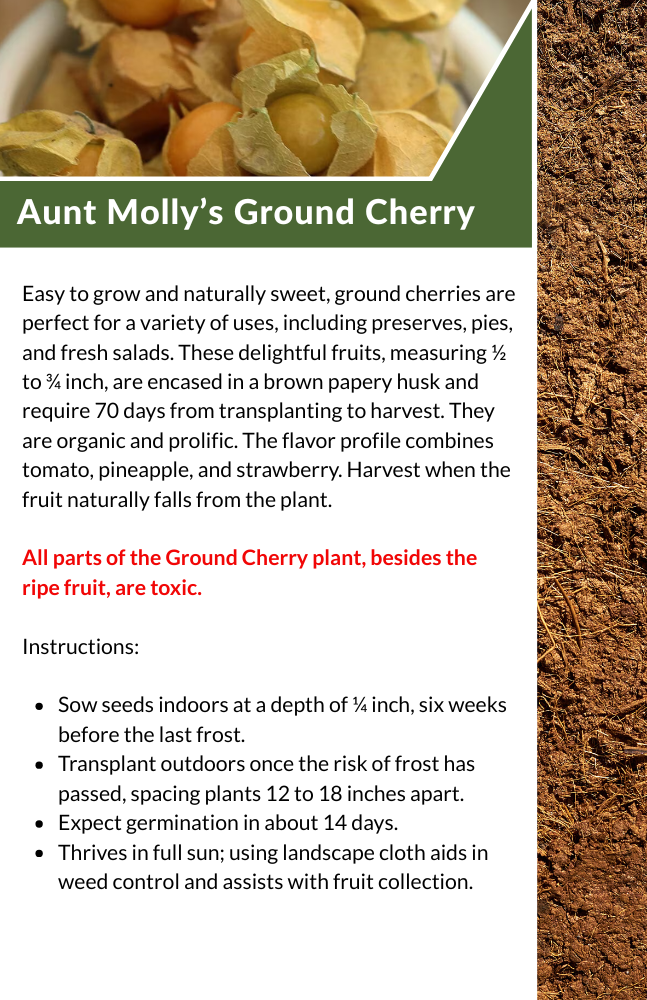
Aunt Molly’s Ground Cherry
Easy to grow and naturally sweet, ground cherries are perfect for a variety of uses, including preserves, pies, and fresh salads. These delightful fruits, measuring ½ to ¾ inch, are encased in a brown papery husk and require 70 days from transplanting to harvest. They are organic and prolific. The flavor profile combines tomato, pineapple, and strawberry. Harvest when the
fruit naturally falls from the plant.
All parts of the Ground Cherry plant, besides the ripe fruit, are toxic.
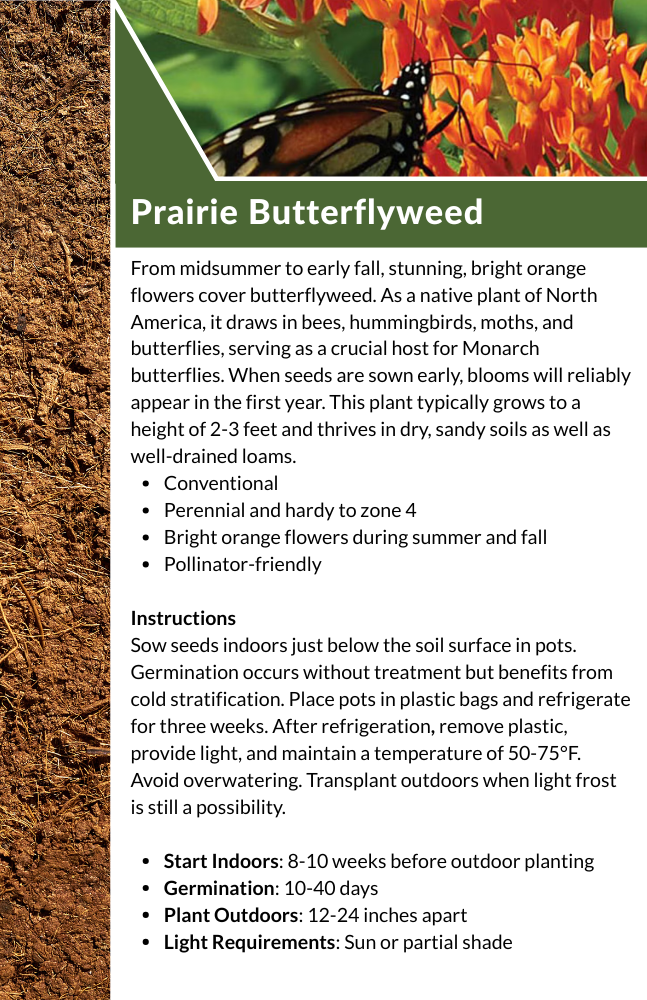
Prairie Butterflyweed
From midsummer to early fall, stunning, bright orange flowers cover butterflyweed. As a native plant of North America, it draws in bees, hummingbirds, moths, and butterflies, serving as a crucial host for Monarch butterflies. When seeds are sown early, blooms will reliably appear in the first year. This plant typically grows to a height of 2-3 feet and thrives in dry, sandy soils as well as well-drained loams.
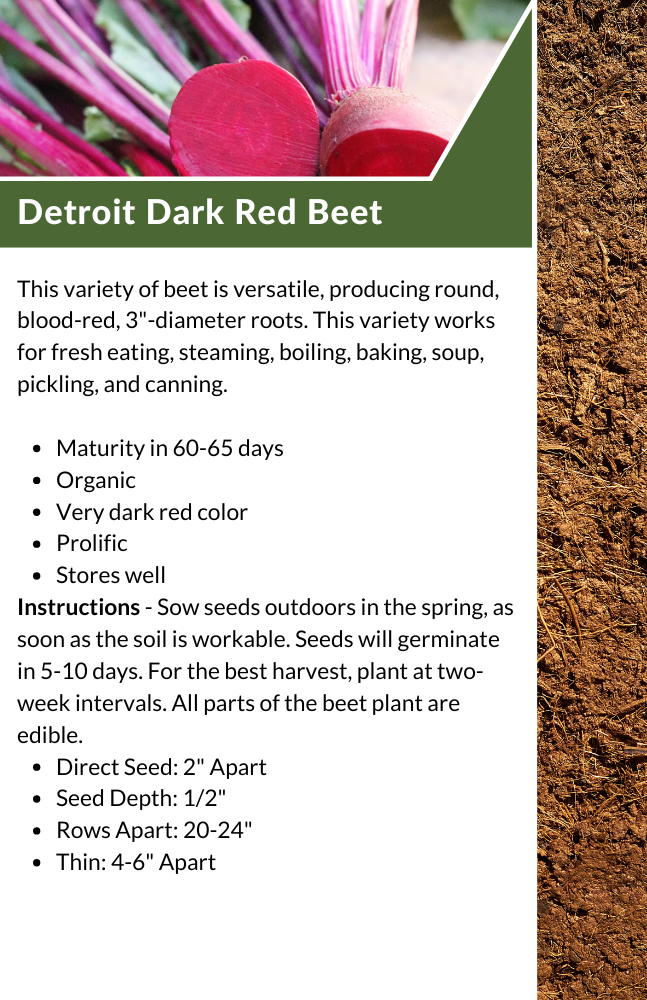
Detroit Dark Red Beet
This variety of beet is versatile, producing round, blood-red, 3″-diameter roots. This variety works for fresh eating, steaming, boiling, baking, soup, pickling, and canning.
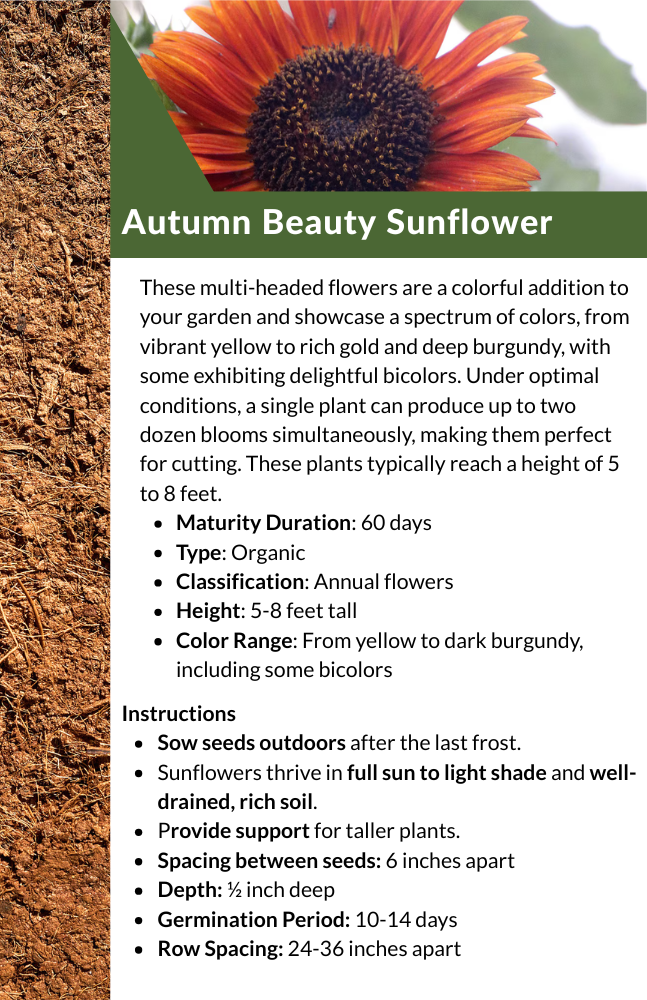
Autumn Beauty Sunflower
These multi-headed flowers are a colorful addition to your garden and showcase a spectrum of colors, from vibrant yellow to rich gold and deep burgundy, with some exhibiting delightful bicolors. Under optimal conditions, a single plant can produce up to two dozen blooms simultaneously, making them perfect for cutting. These plants typically reach a height of 5 to 8 feet.
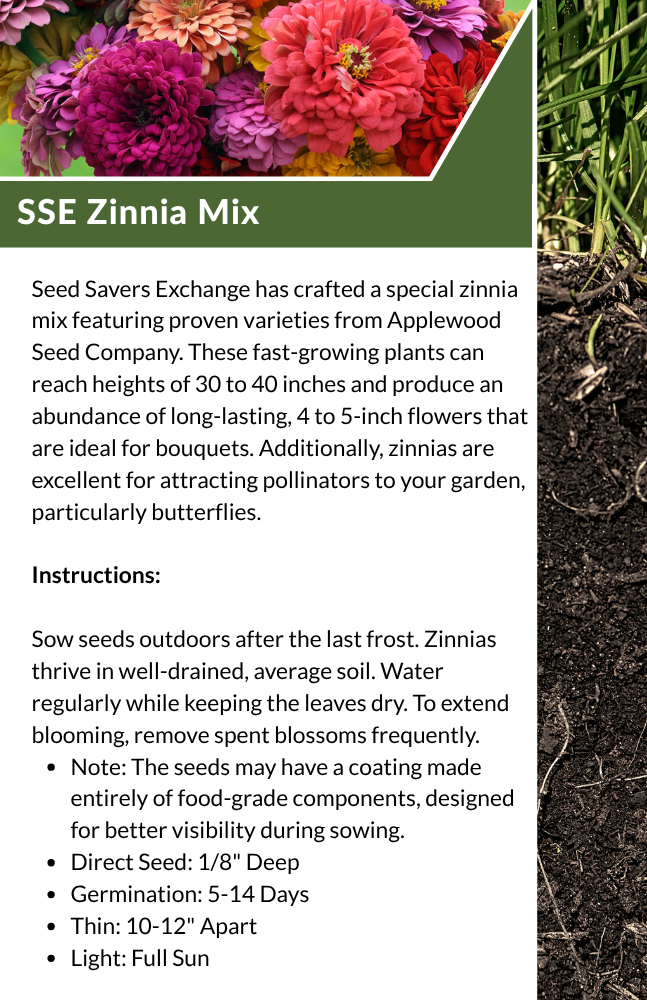
SSE Zinnia Mix
Seed Savers Exchange has crafted a special zinnia mix featuring proven varieties from Applewood Seed Company. These fast-growing plants can reach heights of 30 to 40 inches and produce an abundance of long-lasting, 4 to 5-inch flowers that are ideal for bouquets. Additionally, zinnias are excellent for attracting pollinators to your garden, particularly butterflies.
Produce photos and seed information courtesy of Seed Savers Exchange
Explore the eight different varieties of seeds available this year. (Hover over each image for details)
Lemon Mint
(Also known as Bee Balm or Horsemint) Traditionally utilized by Native Americans for both medicinal and culinary applications, the citrus-flavored leaves of lemon mint can be finely chopped and incorporated into fruit jellies.
Delicatesse White Kohlrabi
This kohlrabi has it all—juicy, crunchy, and crisp stems paired with a subtly spicy, sweet flavor. The bulbs are light green, varying from round to slightly elongated, while the plants feature light-green petioles with light-purple bases.
Hungarian Yellow Wax Sweet Pepper
This pepper is a productive plant that grows 18 to 30 inches tall, producing sweet, slightly hot, banana-shaped peppers up to 6 inches long.
Aunt Molly’s Ground Cherry
Easy to grow and naturally sweet, ground cherries are perfect for a variety of uses, including preserves, pies, and fresh salads.
Prairie Butterflyweed
From midsummer to early fall, stunning, bright orange flowers cover butterflyweed. As a native plant of North America, it draws in bees, hummingbirds, moths, and butterflies, serving as a crucial host for Monarch butterflies.
Detroit Dark Red Beet
This variety of beet is versatile, producing round, blood-red, 3″-diameter roots. This variety works for fresh eating, steaming, boiling, baking, soup, pickling, and canning.
Autumn Beauty Sunflower
These multi-headed flowers are a colorful addition to your garden and showcase a spectrum of colors, from vibrant yellow to rich gold and deep burgundy, with some exhibiting delightful bicolors.
SSE Zinnia Mix
Seed Savers Exchange has crafted a special zinnia mix featuring proven varieties from Applewood Seed Company.
Produce photos and seed information courtesy of Seed Savers Exchange
Recommended Resources Available at Your Library
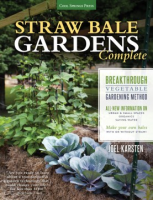
Straw bale gardens complete: breakthrough vegetable gardening method
by Joel Karsten

Gardening for beginners: 3 in 1 collection – container gardening, greenhouse gardening, vertical gardening
by Nancy Ross

Gardening with Heirloom Seeds
by Lynn Coulter

Vertical Gardening
by Derek Fell

Gardening for birds, butterflies, & bees: everything you need to know to create a wildlife habitat in your backyard.